Don't Get Tangled Up: How to Spot AI-Generated Crochet Patterns on Etsy
Apr 3rd 2026
If you've spent any time browsing Etsy for crochet patterns lately, you may have noticed something feels… off. The photos look almost too polished. The finished objects seem impossibly perfect. The yarn drapes in ways that real yarn just doesn't. Welcome to the AI pattern problem — and it's growing fast.
Sellers are increasingly using AI image generators and text tools to create fake crochet patterns, slap a pretty cover photo on them, and list them for sale. The patterns themselves are often riddled with errors, missing rows, or instructions that are simply impossible to execute with real yarn and real hands. Buyers are left frustrated, out a few dollars, and stuck with a file that belongs in the trash.
The good news? There are some reliable ways to spot these listings before you buy.
1. Look for Stitches That Are Too Perfect
Real crochet has character. Stitches vary ever so slightly in tension. Edges aren't laser-straight. There's a warmth and handmade quality to a finished object that's genuinely hard to fake — but AI image generators don't know that.
When you look at a listing photo and every single stitch looks identical, machine-precise, and flawlessly uniform, that's a red flag. Real crochet, even from the most experienced makers, has a beautiful organic quality to it. If the texture looks more like a render from a video game than something a human actually made with their hands, trust your instincts.
2. Look for Inconsistencies in the Photos
AI image generators are impressive, but they're not perfect. Look closely at the full image — not just the finished object. Common tells include:
- Yarn ends that disappear into nowhere or weave in illogically
- Hands that look wrong — extra fingers, strange proportions, or blurred edges where skin meets yarn
- Backgrounds that blur or distort in ways that don't make physical sense
- Seams or joins that don't align across different parts of the piece
- Garments that couldn't actually be put on a body — armholes in the wrong place, necklines that defy anatomy
If something makes you look twice and you can't quite put your finger on why, zoom in. AI artifacts often hide in the details.
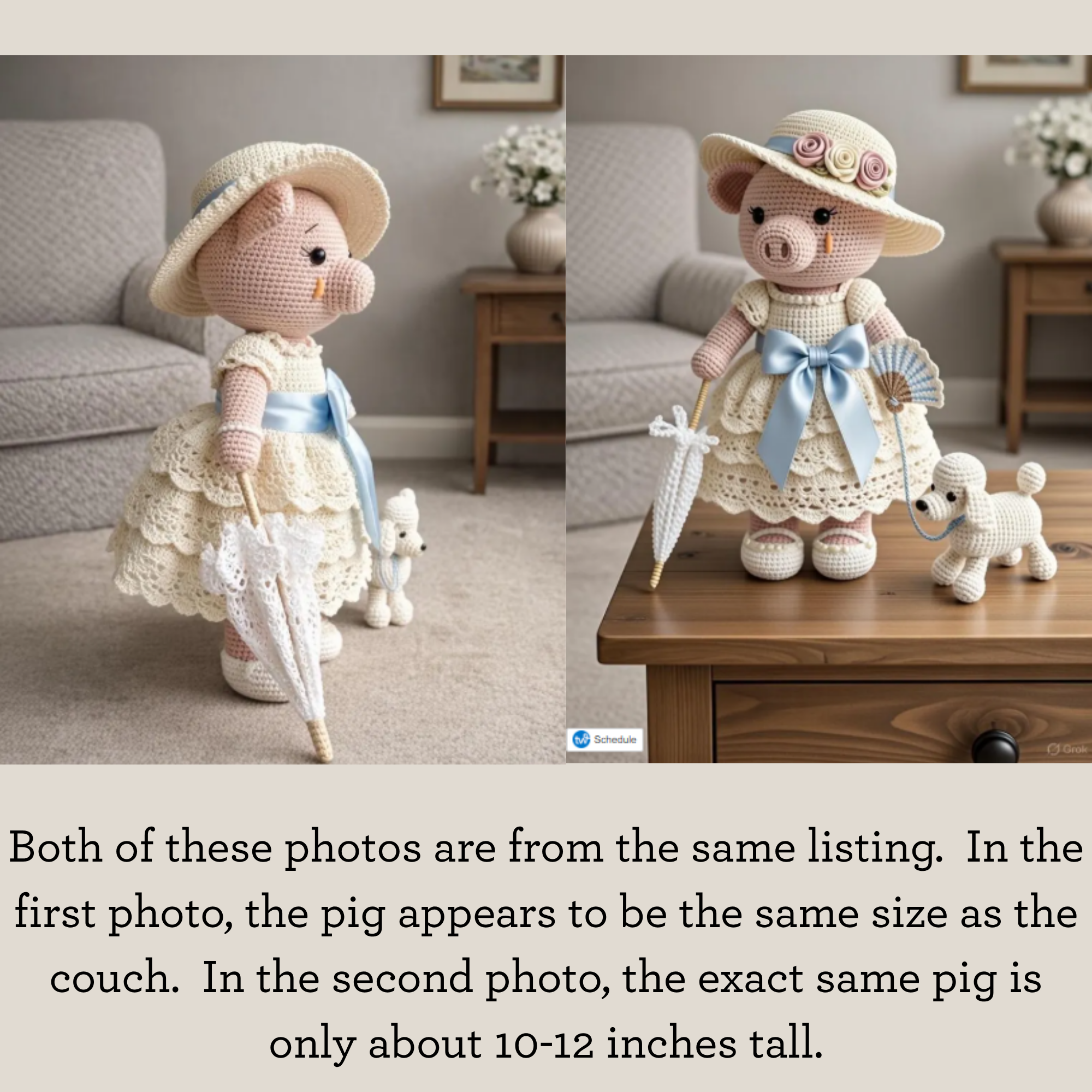
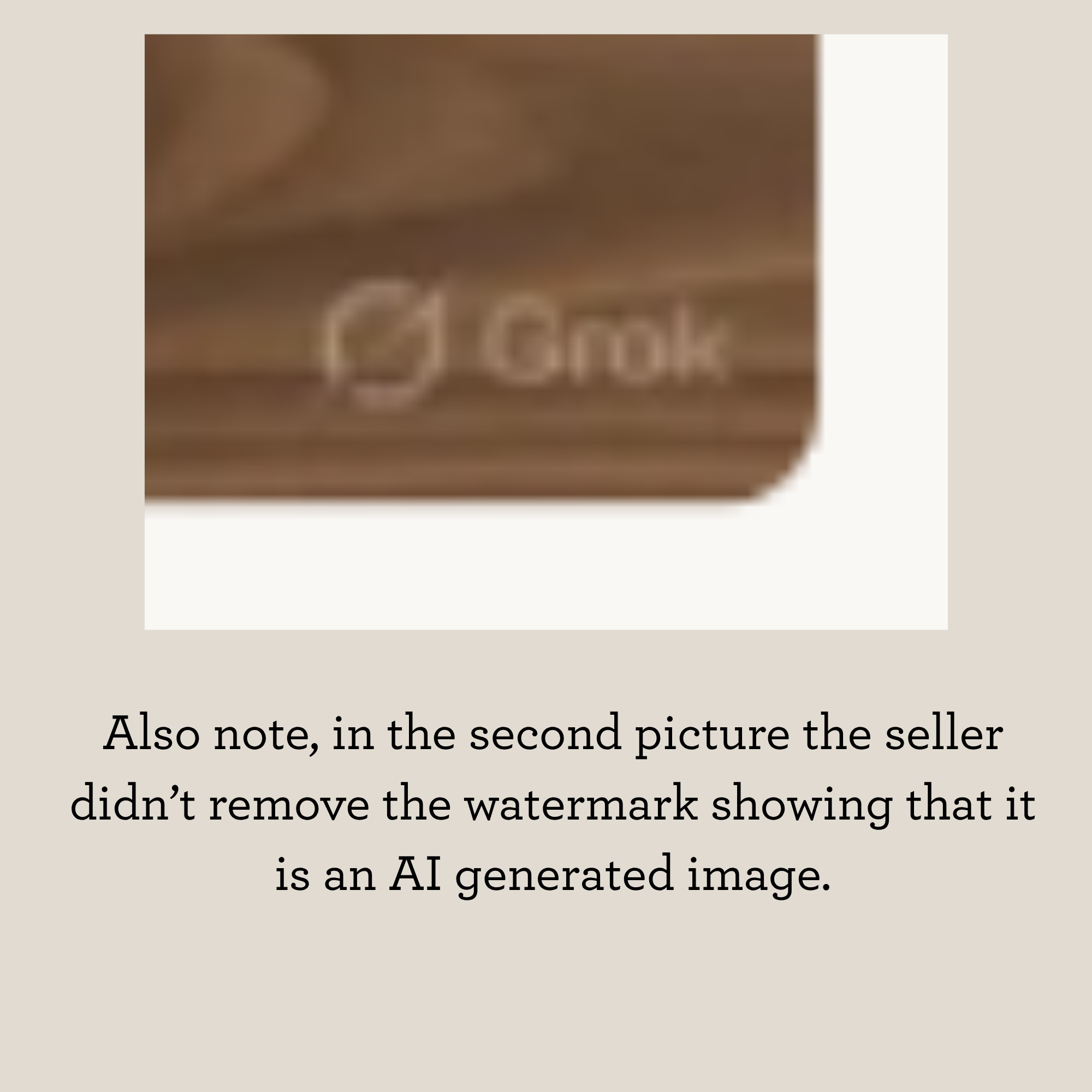
3. Check What Else Is in the Photo
This is one of the most underrated tricks for spotting AI listings, and it's surprisingly effective. Look at everything in the background and around the finished object.
A real crafter taking photos of their work tends to have a very human workspace. You might see a basket of actual yarn, a pair of scissors, a hook left on the table, a cup of coffee, or a cozy chair that clearly belongs to a real person. These things are messy and real and true.
AI-generated photos, on the other hand, often populate the background with objects that are vaguely craft-adjacent but weirdly generic — or they'll include other items that also look crocheted but are physically implausible. Balls of yarn that look melted. A basket with a weave pattern that makes no structural sense. A "cozy" background that feels like it was assembled from a stock photo database, because it essentially was.
If everything in the photo looks artificially perfect and thematically coordinated down to the last detail, that's a tell.
4. Check How Long the Seller Has Been on Etsy
This is one of the most reliable signals of all. Look at the seller's profile and find the date their shop opened. Etsy displays this information right on the storefront.
A seller who has been on Etsy for five, eight, ten years or more and has been consistently listing crochet patterns during that time is almost certainly a real maker. Building a long-term Etsy presence takes genuine effort, real products, and real customer relationships. The AI pattern flood is a recent phenomenon — these sellers existed long before these tools did.
A shop that opened six months ago, has 200 listings, and sells exclusively digital downloads? Worth a much closer look.
5. Read the Reviews — All of Them
Before you buy any digital pattern, scroll through the reviews. Look specifically for comments from people who have actually made the pattern, not just downloaded it.
Reviews that say things like "the instructions were clear and the stitch counts worked out perfectly" or "I made this and it turned out exactly like the photo" are gold. Reviews that mention confusion, missing steps, stitch counts that don't add up, or a pattern that was simply unusable are a serious warning sign.
Also pay attention to the ratio of reviews to listings. A shop with dozens of pattern listings but only a handful of reviews — especially if those reviews are vague or focus only on "fast download" — may not have much real-world testing behind its products.
A Word of Support for Real Makers
There are thousands of incredibly talented crochet designers on Etsy who have spent years — sometimes decades — developing patterns, testing them, refining them, and building communities around their work. These are real people who love this craft as much as you do.
When AI-generated patterns flood the marketplace, it's not just buyers who get hurt. It's the real makers who get buried in search results by a wave of low-effort, fraudulent listings.
The best thing you can do is support sellers with history, verified reviews, and a real presence in the crochet community. Follow your favorite designers on Instagram. Join their newsletters. Leave a review when a pattern works beautifully. That's how the good stuff rises to the top.
Happy hooking — and may your stitch counts always be right. ?
Spinning Sheep Designs has been a part of the Etsy handmade community for 18 years. All of our patterns and products are made by real hands, tested in real yarn, and created with a whole lot of love.